Addison’s disease
Table of Contents
Introduction
Addison’s disease, also known as primary adrenal insufficiency, is a rare endocrine disorder that affects the adrenal glands. In this disease, the adrenal glands do not produce enough cortisol and aldosterone – hormones that help regulate your body’s metabolism, immune system, blood pressure and response to stress. Addison’s disease can occur at any age, but is most commonly diagnosed in people aged 30 to 50. Getting diagnosed and beginning treatment for Addison’s disease is important, as the condition can be life-threatening if left untreated. This article will provide an overview of Addison’s disease, its causes, symptoms, diagnosis and available treatments.
What Causes Addison’s Disease?
The adrenal glands are located above each kidney and produce three main types of hormones – glucocorticoids like cortisol, mineralocorticoids like aldosterone and androgens. In Addison’s disease, the adrenal glands are damaged, often by an autoimmune response where the body’s immune system mistakenly attacks the adrenal tissues. Other potential causes include:
- Infections like tuberculosis, fungal infections and HIV
- Bleeding into the adrenal glands
- Cancer cells spreading to the adrenals
- Certain medications stopping adrenal function – Genetic disorders affecting adrenal gland development
Symptoms of Addison’s Disease
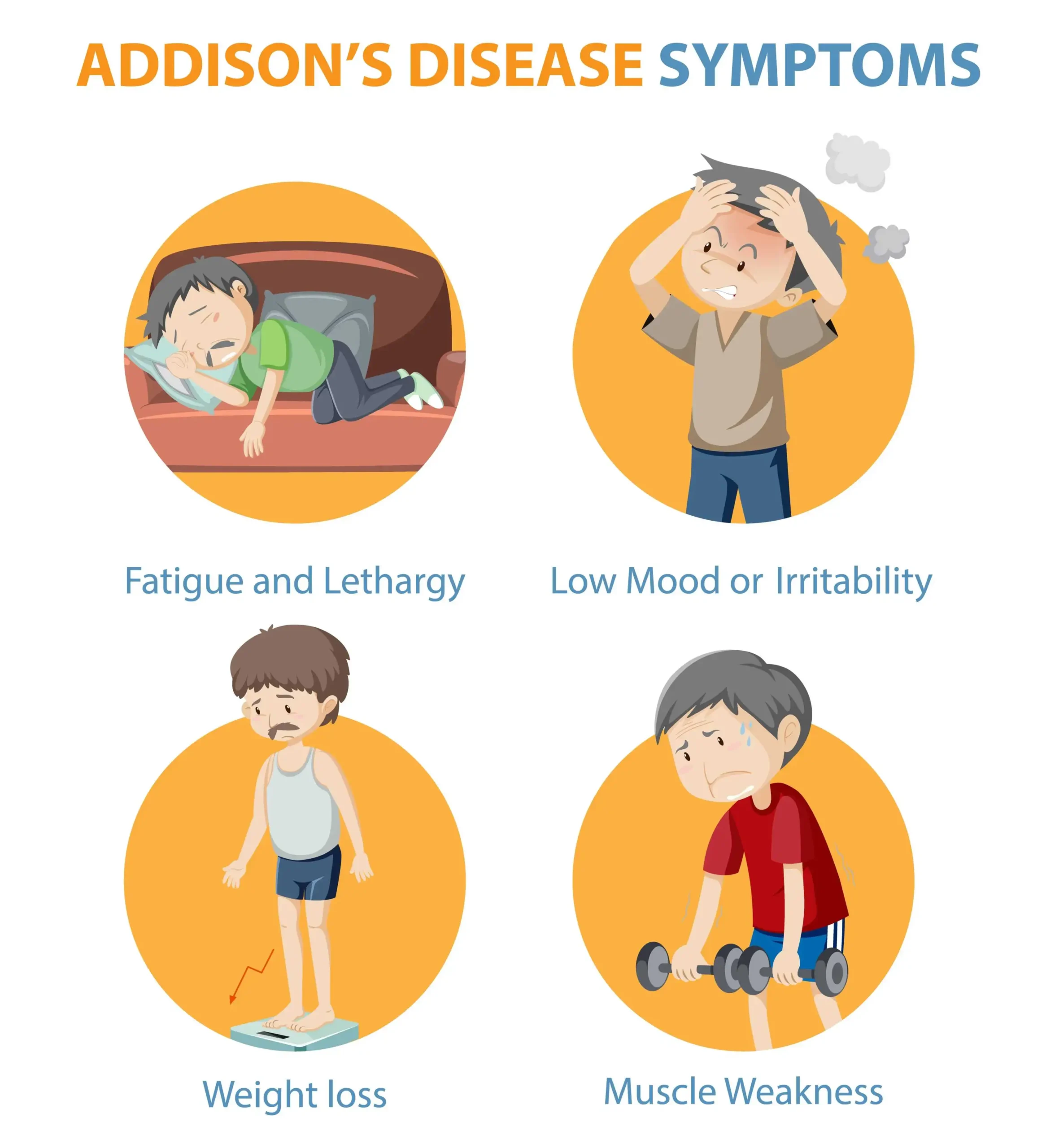
- Fatigue, tiredness and muscle weakness
- Loss of appetite and unintentional weight loss
- Abdominal pain, nausea and vomiting
- Salt craving
- Low blood pressure that can cause dizziness or fainting
- Irritability and depression
- Body aches and joint pain
- Hypoglycemia or low blood sugar
- Hyperpigmentation or dark tanned looking skin
- Slow heart rate
- Loss of axillary and pubic hair in women
During times of physical stress like infection, trauma or surgery, adrenal crisis can occur which causes severe nausea, vomiting, pain, fever and low blood pressure. Seeking prompt treatment for adrenal crisis is critical.
Diagnosing Addison’s Disease
If signs and symptoms suggest Addison’s disease, tests your doctor may use to diagnose it include:
- Blood tests to check levels of sodium, potassium, cortisol and ACTH
- ACTH stimulation test to see if giving synthetic ACTH causes a cortisol rise
- Imaging tests like CT or MRI scans to look for adrenal abnormalities
- Antibody tests for autoimmune conditions – Genetic testing if congenital adrenal hyperplasia is suspected
Once diagnosed, treatment can help manage the symptoms and complications of the disease.
Treating Addison’s Disease
The main treatment for Addison’s disease involves taking manufactured steroid hormones to replace the cortisol and aldosterone your adrenals can no longer make. These medications are usually taken as a daily pill. Dosages may need to be adjusted during periods of stress. Common medications prescribed include:
- -Fludrocortisone to replace aldosterone
- -Hydrocortisone to replace cortisol
Lifestyle adjustments like eating more salt, wearing medical alert jewelry and being prepared with stress dosing of steroids are also key parts of treatment. Regular endocrinologist follow-ups and lab testing help ensure optimal hormone replacement.
With consistent treatment, many people with Addison’s disease can lead full, active lives. Monitoring for complications like infections, low blood sugar and salt loss is important. Education about adrenal crisis prevention and when to seek urgent care is also recommended.
Preventing Addison’s Disease
For autoimmune forms of Addison’s disease, there is no known way to prevent your immune system from attacking your adrenal glands. But prompt treatment of infections and other conditions that can potentially damage the adrenals may help prevent some cases. If you have a family history of Addison’s disease, genetic counseling may provide insight about inherited risks. Being aware of the signs and symptoms of adrenal insufficiency is also key, as early diagnosis leads to better outcomes.
Living with Addison’s Disease
Though challenging to manage at times, Addison’s disease can be successfully treated. Taking prescribed steroid medications, attending regular doctor visits, avoiding infections through vaccination, wearing a medical ID and managing stress can all help people with Addison’s disease stay as healthy as possible. Seeking prompt care for any potential adrenal crisis is also essential. With diligence and follow-up care, those living with Addison’s can look forward to full and active lives.
Conclusion
Addison’s disease is an uncommon disorder affecting the adrenal glands, but understanding its causes, symptoms and available treatments is important. Diagnosing and beginning steroid replacement therapy early is key to effectively managing Addison’s disease and avoiding complications. While lifelong medication and self-care are required, many people with Addison’s disease thrive with proper treatment. Being aware of this condition can help those affected get the prompt care they need.